Skip to content
Revelius
Book a call

Self check-in

When the guest checks in on their own, without staff, for example with a code at the pitch or on the cabin (självincheckning in Swedish). From operations, not from a statute

Last checked 12 October 2026

Closed since 16:00. The time is 21:14.

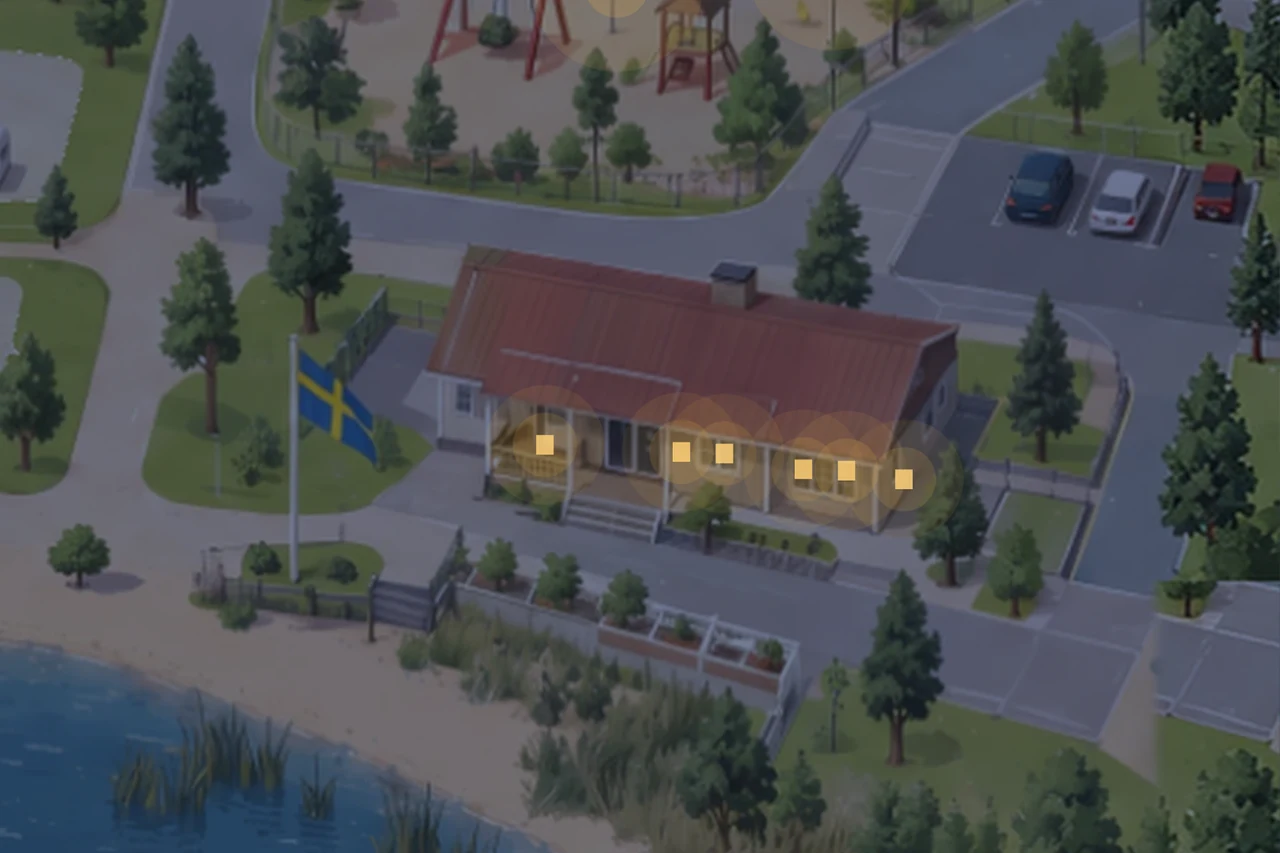
The reception building at night, with lit windows.
The reception at Strandvik at 21:14. The windows are lit, but the counter has been empty since 16. The guest who came in just now never went in here: the code sat at the pitch.
The code
sits at the pitch or on the cabin
The guest's phone
no app to download
The payment
belongs to the booking
The overview
the arrival shows with a time

Common questions

What is self check-in?

When the guest checks in on their own without staff, for example with a code at the pitch or on the cabin. The guest sees their pitch, confirms and pays in the phone.

Does the guest need to download an app?

No. The code sits at the pitch and opens in the browser on the phone.

What happens if the payment is declined?

The booking stands as unpaid and shows as that in the owner's overview, with pitch and time.

Does self check-in count as unstaffed sales?

If no member of staff takes the payment it is unstaffed sales, and then the Swedish Tax Agency's exemption from the requirement for a cash register applies.

Self check-in is not an app the guest downloads. It is that the arrival can be finished without anyone opening: the guest finds their pitch, confirms and pays, and the arrival shows in the overview with a time.

Why the arrival time is the problem

A campsite has its peak between 15 and 19, but guests also come at 22:40 after a long drive. If you staff the reception until midnight you pay for hours with three arrivals. If you close at 16 there is a barrier and a note with a telephone number. Self check-in is the third option.

What the guest does

The guest scans the code at the pitch or on the cabin, sees where the pitch lies, confirms their booking and pays in the phone. The code belongs to the pitch, so nobody has to type in a booking number in the dark.

What the owner sees

The arrival becomes a row in the overview: pitch, time and whether the payment went through. The staff see the same thing in their phone in the morning, so that whoever is cleaning knows who came in during the night and who is leaving today.

What still takes a person

A guest who comes to the wrong pitch, a barrier that does not open or a payment that is declined does not solve itself. Self check-in takes away the queue, not the need for a telephone number that answers. The difference is that the number rings three times a week instead of every evening.

Self check-in is no concept in a law. If you sell unstaffed, it is unstaffed sales that decides what applies for a cash register.

The guest's phone, 21:14. Pitch 11 has just paid.

The same phone the guest is holding. The booking, the pitch and the payment lie in one place, and the arrival goes on to the owner's overview in the same second.

Pitch 11
paid 21:14
The reception
staffed until 16
The clock in the demo
21:14

This is an interactive demo of Revelius: the guest's phone for pitch 11, where you can pay. Everything works with the keyboard.

Demo data. Strandvik is made up, and nothing you do is saved.The full demo is on the front page

The arrival, step by step. Without anyone opening.

  1. 1The guest scans the code at the pitch or on the cabin.
  2. 2The booking opens in the phone, with a map to the pitch.
  3. 3The guest confirms and pays.
  4. 4The arrival stands in the owner's overview with pitch and time.

No queue at the reception. At eleven in the evening too.

At the mapping we go through which arrivals happen without staff, and how they are to work.

Book a call

Revelius is a product of Tavus Sweden AB, Stockholm.