
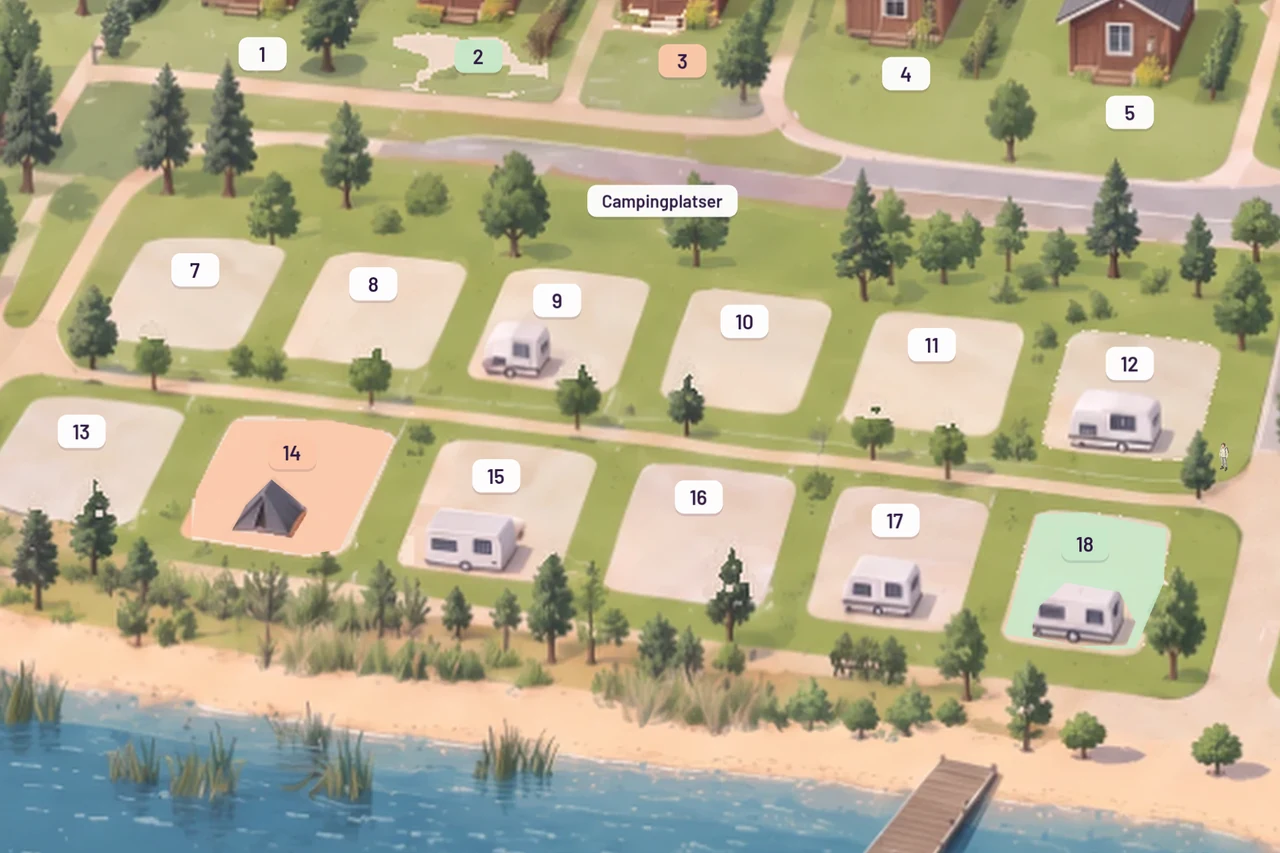
A double booking is seldom one person's slip. It arises in the gap between two channels: the telephone and the web, the counter and another system, or two people writing in the same calendar at the same time.
Where they arise
Three gaps keep coming back. Bookings taken in two places without a shared calendar. A calendar that updates with a delay. And a check that sits in the form instead of in the database — the last is the most treacherous, since the form has no time to discover anything when two bookings arrive in the same second.
What it costs when it is discovered late
Two motorhomes stand at the entrance at 20:30 with one confirmation each for pitch 14. One of them can be moved to a free pitch, the other cannot, and the owner stands in the reception for twenty minutes instead of closing the day. The cost is seldom the money — it is the evening, and the review the day after.
The protection belongs in the database
A check in the interface is a guess that nobody else is writing at the same time. A rule in the database is a promise: the same pitch cannot exist twice on the same night, and the second booking is refused straight away. That holds when the booking comes from another system through an integration too, since the rule lies beneath every way in.
Overbooking is something else
Overbooking is a deliberate choice: more bookings than pitches, trusting in cancellations. A double booking is an error. The two are never to be confused, and a system that protects against the one is not to make the other impossible for whoever wants it.
Double booking is no concept in a law, but a word from operations. How the calendar works is described under bookings and calendar.